

Only Good Antibodies — characterisation

Overview
Highlights antibodies cited on a page and shows the knockout-controlled characterisation data for the application they were used in.
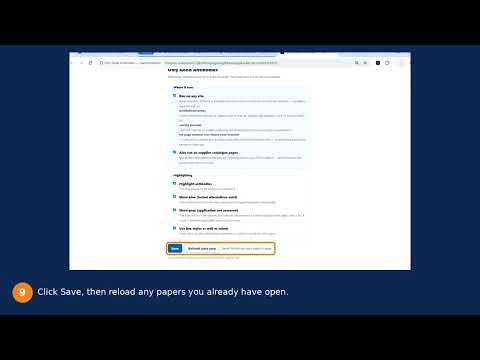
Most antibodies in the literature have never been tested against a knockout. Only Good Antibodies marks the ones that have. So far that is 4,290 application-level test results, on antibodies appearing in 29,207 published papers — according to CiteAb, current to 2026-05-05. Open a paper on a journal site, a preprint server or Europe PMC and every antibody in the methods that YCharOS has characterised is underlined, right there in the text. Hover it to see how it did in each application — western blot, immunoprecipitation, immunofluorescence, flow cytometry — alongside the wild-type-versus-knockout image, the clone, the RRID and a link to the report. Switch on Also run on supplier catalogue pages and you can see while you shop whether an independently characterised antibody exists for your target. Results are given per application, so one antibody can carry several: Supportive — tested with knockout controls under the consensus protocols, and the data supports the application used here. Limited support — not supportive overall, but the antibody was still seen to do something on-target. The card says what was seen. Not supportive — tested with knockout controls, and nothing on-target was seen in the application used here. Split — supportive in some of the applications tested and not in others. Alternatives exist — no catalogue number given, or the product is not in the dataset, but its target has been characterised. The card leads with the characterised alternatives. Application untested — in the dataset, but never tested this way. Untested is not failed, and a result in another application does not carry over. A toolbar panel adds up the whole page and lists alternatives. Any card can hand the paper to your own AI assistant through the OGA connector, to work out which application was used and whether the authors ran controls of their own. From 0.4.0, red will also mark antibodies raised against a different protein from the one they share a name with — a card naming both proteins, what the review found about the paper you are reading, and a link to it. What the results mean. Everything is tested under the same standard conditions, which is what makes it characterisation data rather than a verdict — antibodies behave differently in different assays and samples. It matters most when a paper shows no validation of its own. A paper with its own knockout or knockdown may be perfectly fine using an antibody that struggled in our hands. Where the data comes from. YCharOS, an open-science consortium that tests antibodies against knockout cell lines to a community protocol and publishes every result — negatives included — as a peer-reviewed report with a DOI. No supplier claims, no citation counts. Wrong-target flags are separate: they come from investigative reporting at For Better Science, and each links to the original post. It does not watch you read. The dataset is stored in your browser and all matching happens there. No page text, URL or reading history goes anywhere. The extension contacts one domain for two things: a daily refresh of the data, and loading an image when you open a card. No account, no analytics. Works in Chrome, Edge, Brave and Firefox, on 100 publisher, preprint and repository sites — and on anything else you read once Run on any site is switched on. Free, and always will be.
5 out of 51 rating
Details
- Version0.4.2
- UpdatedSeptember 19, 2026
- Size248KiB
- LanguagesEnglish (United Kingdom)
- DeveloperWebsite
Email
onlygoodantibodies@gmail.com - Non-traderThis developer has not identified itself as a trader. For consumers in the European Union, please note that consumer rights do not apply to contracts between you and this developer.
Privacy

This developer declares that your data is
- Not being sold to third parties, outside of the approved use cases
- Not being used or transferred for purposes that are unrelated to the item's core functionality
- Not being used or transferred to determine creditworthiness or for lending purposes
Support
For help with questions, suggestions, or problems, visit the developer's support site